

Wedding theme vs wedding style: what is the difference?
One of the first questions couples often ask when they begin imagining their wedding is: “What theme should we choose?”. It is a natural question, because it seems to create order. Travel theme, botanical theme, vintage theme, cinema theme, lake theme: each definition appears to offer a clear direction.
Yet, for many couples, starting from a theme can become a limitation. The same symbol begins to appear everywhere: on the invitations, the place cards, the seating chart, the menus, the favours. The result may be recognisable, but not always refined. More importantly, it may not truly express the couple.
Style is different. It is deeper, more flexible and closer to atmosphere than decoration. That is why, when the aim is a personal and elegant wedding, the better question is not “What is the theme?”, but “What kind of world do we want to create?”.
What a wedding theme is
A theme is a defined narrative reference. It can be a place, an era, an object, a shared interest, a journey, a passion. Its advantage is immediacy: once chosen, it suggests images, colours and details that are easy to recognise.
A theme can work when it is handled with restraint. The problem begins when it becomes too literal. A wedding inspired by travel does not need suitcases, globes and boarding passes in every corner. A botanical wedding does not need to become a catalogue of printed leaves.
When a theme is applied too directly, it can flatten the project. Instead of expressing a feeling, it displays a label.
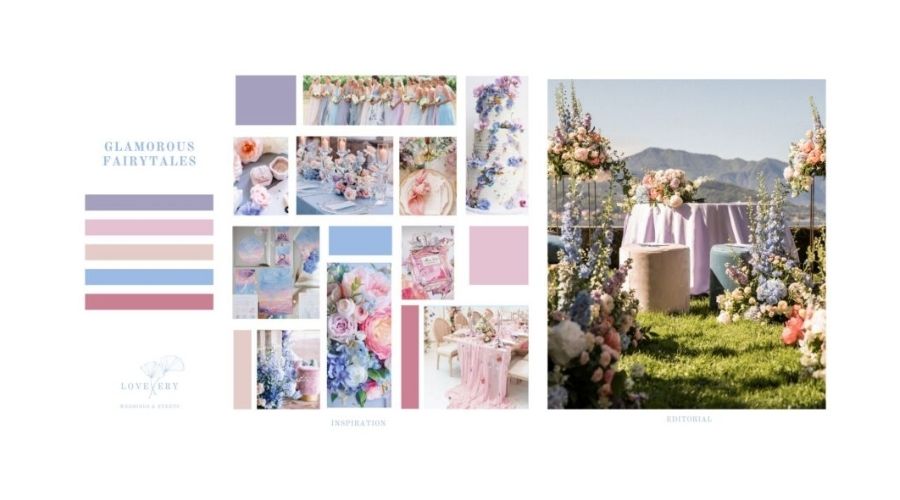
What wedding style is
Style is the way a wedding breathes. It is the combination of shapes, colours, materials, proportions, rhythm, light, sounds and gestures. It does not simply say what the event is about; it defines how the event is perceived.
A style can be essential, romantic, architectural, tactile, natural, sophisticated, intimate, theatrical, luminous or quiet. It does not require the repetition of a symbol. It allows the creation of a coherent atmosphere in which every decision makes sense, even without being explained.
For couples seeking an elegant wedding, style is often more useful than theme. It leaves room for personality without becoming decorative. It allows the event to feel recognisable without becoming predictable.
Choose the right service for your wedding
Choose the right service for your wedding
The concept: the bridge between identity and style
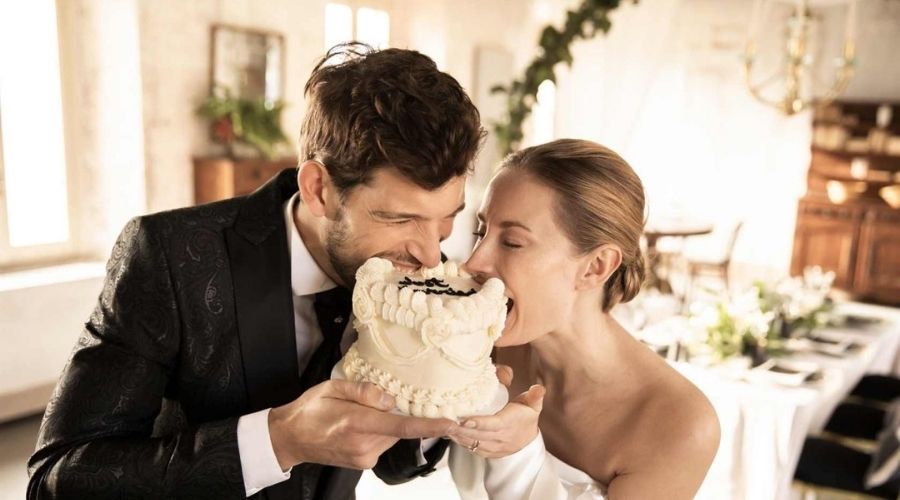
Between theme and style there is a third essential element: the concept. The concept is the creative idea that holds the project together. It comes from the couple and translates their identity into an aesthetic and sensory direction.
A concept may arise from a sentence, a material, the tension between two worlds, a memory, an emotional geography. It does not need to be visible as a logo or a symbol. It should be perceived in the choices: the light, the palette, the materials, the venue, the music, the way guests are welcomed.
If the theme says “this wedding is about travel”, the concept may say “this wedding is about how two people learned to feel at home anywhere”. The difference is subtle, but it changes everything.
Why couples choose a theme too early
A theme is often chosen early because it helps fight uncertainty. Planning a wedding means making many decisions, and a theme seems to offer a shortcut. But a shortcut does not always lead to the right place.
When the meaning of the wedding is not yet clear, the theme can become a substitute for identity. Couples choose something they like, but not necessarily something that represents them. They follow a trend, a season or a palette found online, without asking whether it truly belongs to them.
The risk is not an ugly wedding. The risk is a beautiful but generic one: correct, but not memorable.
How to understand which style represents you
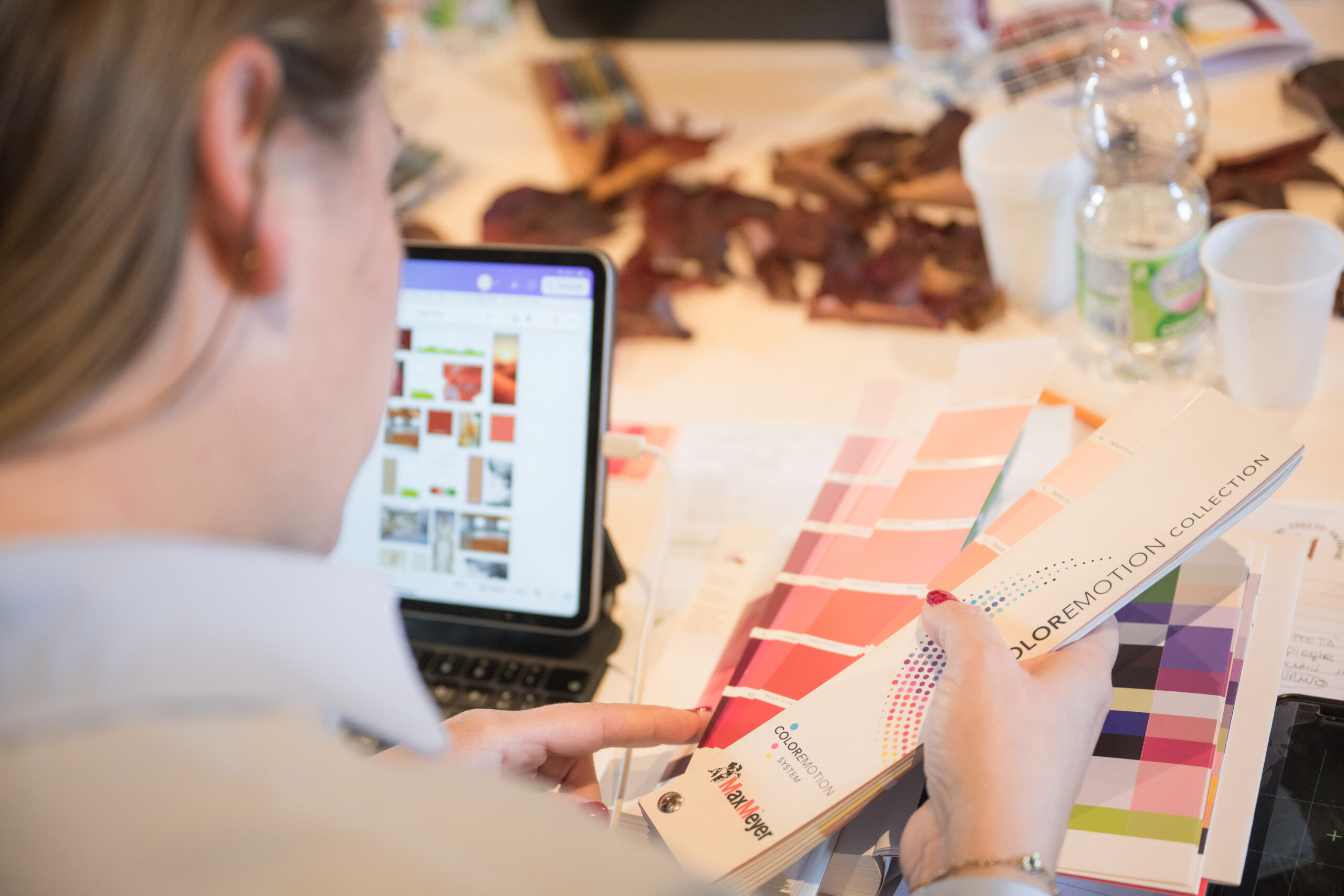
To understand the right style, I would not start from images. I would start from simpler and deeper questions: which spaces make you feel at ease? Do you prefer imperfect, tactile beauty or a more rigorous kind of beauty? Do you feel closer to warm, lived-in environments or airy, minimal spaces? Do you want guests to feel wonder, calm, belonging or energy?
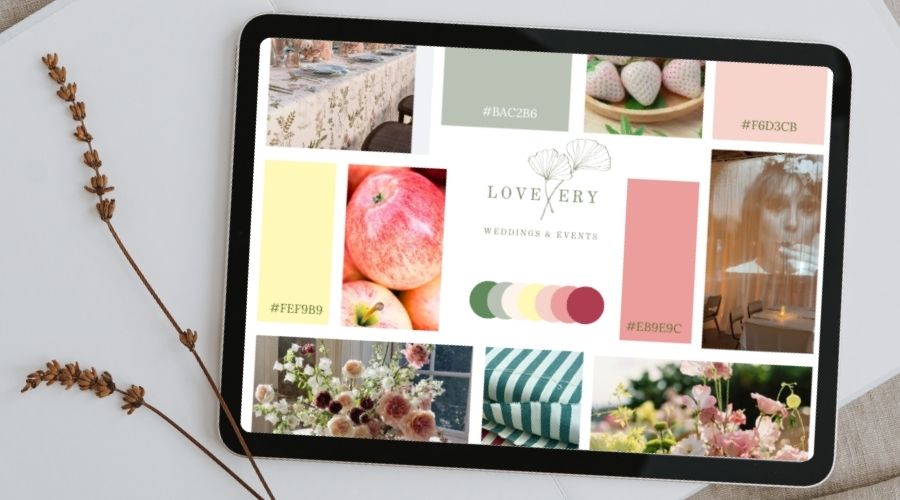
The answers do not immediately produce an installation, but they reveal a direction. From there, it becomes possible to build a palette, select materials, evaluate venues, define the tone of the stationery, imagine the table design and give coherence to the whole experience.
Examples: from theme to style
A “lake theme” can become a style made of liquid light, reflective surfaces, fluid fabrics, mineral colours and a slow sense of welcome. A “travel theme” can become a project built around inner maps, meaningful places, discreet details and a narrative that follows the couple’s path. A “nature theme” can become a search for living materials, organic palettes and unconventional botanical compositions.
In all these cases, the original idea is not erased. It is elevated. The project moves from decoration to design.
The role of a wedding design consultation
A wedding design consultation helps couples make this transition. It takes intuitions, tastes, doubts and desires and turns them into a clear direction. It does not impose a style from the outside; it reveals the one that is most coherent with the couple.
This work is especially valuable at the beginning, before suppliers and details are chosen. Once the concept is defined, every professional involved can work with greater precision: the floral designer, the stationer, the lighting designer, the photographer, the venue and the planning team.
Conclusion
A theme can be a starting point. Style is the way the wedding takes shape. The concept is what allows both to avoid remaining on the surface.
If you want a personal, elegant and non-conventional wedding, do not ask only which theme to choose. Ask which atmosphere represents you, which experience you want to offer, and which truth you want the day to preserve.
F.A.Q.
Is choosing a wedding theme wrong?
No. A theme can be useful, as long as it is not applied too literally or repetitively. The point is to transform it into a more mature aesthetic direction.
Should style be defined before the venue?
It is preferable to have at least a stylistic direction before making the final venue choice. In this way, the venue is chosen because it is coherent, not only because it is beautiful.
Can wedding design help if we already have many ideas?
Yes. This is often the most useful case: the work is to select, organise and give coherence to everything you already like.

